Project Summary & System Overview
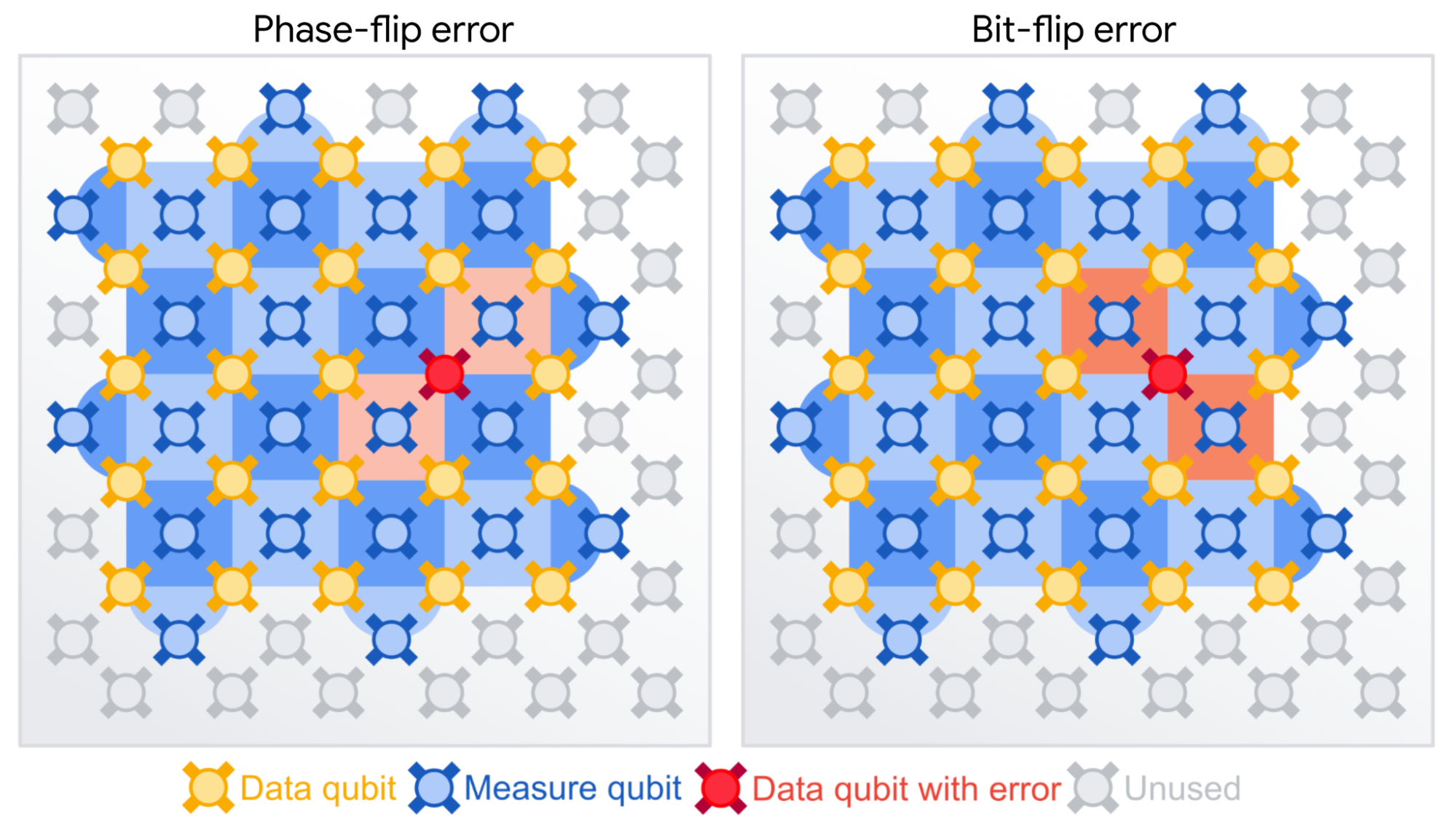
This project investigates the reliability of quantum information encoded using the surface code, focusing on the impact of spatially correlated faults—such as those induced by ionizing radiation—on logical qubit preservation. The study compares two architectural strategies: static redundancy (maintaining a high code distance) and dynamic code deformation (temporarily reducing code distance in response to detected bursts).
Using a rotated surface code lattice, the analysis quantifies how burst faults affect logical error rates and overall system performability, providing design guidance for future quantum hardware.
Surface Code Architecture
The lattice model uses:
- Data Qubits — carry logical information.
- Syndrome Qubits — stabilizer measurements.
- Code Distance (d) — controls error suppression capability.
Validation & Methodology
The methodology employs fault injection by simulating spatially localized bursts in the code lattice, stressing the decoder and evaluating both static and dynamic policies. Performance is measured using a performability metric that combines logical error rate and computational utility, reflecting real-world trade-offs.
Establish logical error rates under independent depolarizing noise across code distances.
Inject a spatially localized high-intensity burst with parameter p_burst in the chosen quadrant.
Compare Static Redundancy and Dynamic Deformation policies using the reward metric R = (1 - P_L) × V_config.
Implementation & Materials
All simulation scripts, Jupyter notebooks, and supporting materials are available in the shared project folder. The primary repository, including code, data, and presentation slides, can be accessed via the button below:
Implementation snapshot (pseudocode):
Implementation snapshot (pseudocode):
    // Pseudocode: Correlated Fault Injection Loop
    for each QEC_round in rounds:
      apply_background_noise(p_phys)
      if burst_condition_met:
        inject_correlated_noise(Q_burst, p_burst)
      extract_syndromes()
      result = decode_with_MWPM()
      record_logical_outcome(result)
    end
The Stim circuits, PyMatching decoder pipeline, and plotting utilities are included in the shared notebook and repository.